The world exists to help us understand ourselves. Brahma created the world in order to understand himself. Brahma creates kama, yama, karma, ego, and the three worlds. The purpose of life is to realize ego and overpower it.
Bibliography: Seven Secrets from Hindu Calendar Art: Part G (Brahma's Secret)
Author/From: Devdutt Pattanaik
Link: http://iereadingguides.blogspot.com/2015/11/featured-video-vishnus-secret-detached.html
Showing posts with label Reading Notes. Show all posts
Showing posts with label Reading Notes. Show all posts
Friday, May 5, 2017

Wednesday, April 26, 2017
Reading Notes: Devdutt Pattanaik Videos, Part F: Vishnu's Secret
Cows are the most sacred animal in the hindu faith. They are not allowed to eat beef. Some wonder if cows produce milk for humans or for their calf's. People must treat cows with respect because they provide so much for humans. Vishnu is known as the preserver and everyone is expected to respect cows because Vishnu does.

Rama is the most revered avatar of Vishnu. He is a king that leads by example and follows the laws set before him. Ravana is the complete opposite of Rama. He believes in using power to take what he wants while Rama follows laws even though he has power.
Krishna is another popular avatar of Vishnu.
Bibliography: Seven Secrets from Hindu Calendar Art: Part F (Vishnu's Secret)
Author/From: Devdutt Pattanaik
Link: http://iereadingguides.blogspot.com/2015/11/featured-video-devis-secret-desire-and.html

(Vishnu.
Source: Web)
Dharma is what creates a stable society by domesticating the animal within man. Vishnu also represents organization. The mission of life is to survive through strength or cunning.
Vishnu is called the lord of maya meaning measurement. He judges whether what you do is good or bad. What is good is love, caring, and affection for others. While what is bad is everything else.
Krishna is another popular avatar of Vishnu.
Bibliography: Seven Secrets from Hindu Calendar Art: Part F (Vishnu's Secret)
Author/From: Devdutt Pattanaik
Link: http://iereadingguides.blogspot.com/2015/11/featured-video-devis-secret-desire-and.html
Monday, April 24, 2017
Reading Notes: Devdutt Pattanaik Videos, Part E: Devi's Secret
Kanyakumari wanted to marry Shiva. When Shiva was on his way to marry this goddess the sun rose so he went back home. Kanyakumari was upset that Shiva didn't show up so she cried and it is believed that the sands in the southern area of India are multicolored because this is where she cried(She cried with makeup on).
Lakshmi is the embodiment of the earths wealth and bounty. She is depicted in a pot because back then people use to put valuable things in pots.
Kama is the god of desire.
These Devdutt Pattanaik videos are getting really confusing, This part is titled Devi's secret but I have yet to figure out who this Devi person is or what it means. What I do know though is that this video mainly focused on the idea of desire. It is believed that desire is the reason we are all alive to this day. The creator had a desire to create us.
Bibliography: Seven Secrets from Hindu Calendar Art: Part E (Devi's Secret)
Author/From: Devdutt Pattanaik
Link: http://iereadingguides.blogspot.com/2015/11/guide-pattanaiks-calendar-art-part-d.html
Lakshmi is the embodiment of the earths wealth and bounty. She is depicted in a pot because back then people use to put valuable things in pots.
Kama is the god of desire.
These Devdutt Pattanaik videos are getting really confusing, This part is titled Devi's secret but I have yet to figure out who this Devi person is or what it means. What I do know though is that this video mainly focused on the idea of desire. It is believed that desire is the reason we are all alive to this day. The creator had a desire to create us.
Bibliography: Seven Secrets from Hindu Calendar Art: Part E (Devi's Secret)
Author/From: Devdutt Pattanaik
Link: http://iereadingguides.blogspot.com/2015/11/guide-pattanaiks-calendar-art-part-d.html
Reading Notes: Devdutt Pattanaik Videos, Part D: Shiva's Secret
Shiva is known as the destroyer. He is calm and and composed yet does not really seem like a destroyer. Shiva destroys the one who provokes desire. Shiva's trident represents the self.
The way Shiva destroys is by closing his eyes and not observing what's going on around him. Shiva keeps his eyes shut because he doesn't care about the material world.
Shiva cares for Sati and only acts irrationally when she is in trouble.
Parvati is the one who is married to Shiva.
Shiva is the source of all potency.
The left side is the material world while the right is the spiritual world.
Bibliography: Seven Secrets from Hindu Calendar Art: Part D (Shiva's Secret)
Author/From: Devdutt Pattanaik
Link: http://iereadingguides.blogspot.com/2015/11/featured-video-ardhanaris-secret-god-is.html
The way Shiva destroys is by closing his eyes and not observing what's going on around him. Shiva keeps his eyes shut because he doesn't care about the material world.
Shiva cares for Sati and only acts irrationally when she is in trouble.
Parvati is the one who is married to Shiva.
Shiva is the source of all potency.
The left side is the material world while the right is the spiritual world.
Bibliography: Seven Secrets from Hindu Calendar Art: Part D (Shiva's Secret)
Author/From: Devdutt Pattanaik
Link: http://iereadingguides.blogspot.com/2015/11/featured-video-ardhanaris-secret-god-is.html
Tuesday, April 18, 2017
Reading Notes: The Mahabharata Movie: Part E
With the battle in full swing Duryodana is trying to blame Bhishma for their woes. He thinks Bhishma is going easy on Arjuna and Karna even comes up to say he will lead the battle. Bhishma is famed to be a great master of battle for he is a stranger to death.
Amba is finally fulfilling her role in killing Bhishma. But it ended up being Arjuna's arrow that pierced his flesh. Bhishma gave his life to that the pandu brothers would have a better chance against him since he couldn't die.
Karna is one of the most understood characters in the entire Mahabharata. In the readings he seemd like a tough man who was ready to conquer to world. While in this film you can see the emotion that he experiences with each passing scene. You can tell he is truely hurting that he has to fight against his mother and brothers. His only excuse is that duryodanha was there for him when his mother gave him away. All he ever wanted was to have a loving mother but his upbringing filled him with such hatred. And finding out about his true heritage has complicated his life even more. He wants to return to his family but since he vowed to kill Arjuna he wants to take him out first.
Bibliography: Peter Brook, The Mahabharata
Link: http://iereadingguides.blogspot.com/2014/06/film-brook-mahabharata.html
Amba is finally fulfilling her role in killing Bhishma. But it ended up being Arjuna's arrow that pierced his flesh. Bhishma gave his life to that the pandu brothers would have a better chance against him since he couldn't die.
Karna is one of the most understood characters in the entire Mahabharata. In the readings he seemd like a tough man who was ready to conquer to world. While in this film you can see the emotion that he experiences with each passing scene. You can tell he is truely hurting that he has to fight against his mother and brothers. His only excuse is that duryodanha was there for him when his mother gave him away. All he ever wanted was to have a loving mother but his upbringing filled him with such hatred. And finding out about his true heritage has complicated his life even more. He wants to return to his family but since he vowed to kill Arjuna he wants to take him out first.
Bibliography: Peter Brook, The Mahabharata
Link: http://iereadingguides.blogspot.com/2014/06/film-brook-mahabharata.html
Monday, April 17, 2017
Reading Notes: The Mahabharata Movie: Part D
Watching this 5 hour film has helped me to better understand the Mahabharata. Right now in the film the 5 brothers are spending their last year in exile and have to disguise themselves as people who will never be recognized. Yudishthira is now a master at dice, Bhima is a master of pots, while Arjuna is seemingly a female in a mans body. I get the twins confused but one is disguised as a great musician. One of Duryodanas generals comes to the camp where the brothers are hiding and they give them suggestions where to find the pandava brothers. The general has suspicions they are the pandu brothers but when he learns Yudishthira doesn't lose at dice he knows its not them.
The general wants draupadi to come visit him and he tries to rape her. She immediately runs to Bhima in fear. Bhima lays under a cover and the general thinks it's her. He ends up easily killing him by crushing him with his arms.
The 13 year exile is over and the true game of thrones is about to begin. Yudishthira is going to get an army ready to battle for what is his.
Arjuna and Duryodanha seek out Krishna to help with their side of the army. Arjuna gets the first choice. He can either have a massive fully equipped army or Krishna himself who won't fight. Arjuna chooses Krishna to drive his chariot.
Krishna seeks peace one last time but Durodana tries to kill him anyways.
Krishna tells Karna that he is the son of Kunti. He doesn't care and vows to kill Arjuna anyways.

I didn't realize how big of a role krishna played in this story. He is a huge peace keeper but everyone seems to want to fight regardless of all the knowledge he keeps preaching.
Bibliography: Peter Brook, The Mahabharata
Link: http://iereadingguides.blogspot.com/2014/06/film-brook-mahabharata.html
The general wants draupadi to come visit him and he tries to rape her. She immediately runs to Bhima in fear. Bhima lays under a cover and the general thinks it's her. He ends up easily killing him by crushing him with his arms.
The 13 year exile is over and the true game of thrones is about to begin. Yudishthira is going to get an army ready to battle for what is his.
Arjuna and Duryodanha seek out Krishna to help with their side of the army. Arjuna gets the first choice. He can either have a massive fully equipped army or Krishna himself who won't fight. Arjuna chooses Krishna to drive his chariot.
Krishna seeks peace one last time but Durodana tries to kill him anyways.
Krishna tells Karna that he is the son of Kunti. He doesn't care and vows to kill Arjuna anyways.
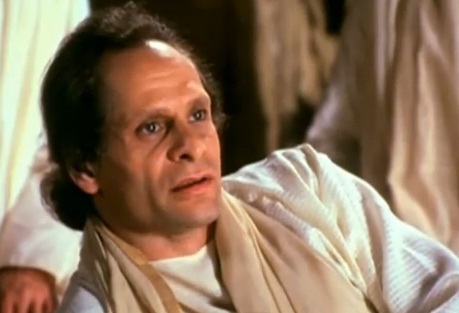
(Krishna in this film.
Source: Web)
I didn't realize how big of a role krishna played in this story. He is a huge peace keeper but everyone seems to want to fight regardless of all the knowledge he keeps preaching.
Bibliography: Peter Brook, The Mahabharata
Link: http://iereadingguides.blogspot.com/2014/06/film-brook-mahabharata.html
Monday, April 10, 2017
Reading Notes: The Mahabharata Movie: Part C
Exile in the forest
Amba seeks out Bhima to kill Bhishma. Bhima declines and Amba proceeds on her way.
Arjuna leaves his brothers and heads into the forest to go find weapons. He is now on his own journey. At the same time Duryodana is back in the kingdom plotting ways he can get away with killing the Pandava brothers.
While Bhishma is on duty for the night watch he encounters a rakshisa named Hidimbi. She instantly falls in love with him and takes on a human form. She wants to marry him and is confused why his current wife has 5 husbands. While the two are talking Hidimbi's brother attacks and a fairly epic battle ensues. It was surprisingly good and I am ready for the war to come towards the end of the film.
Hidimbi ends up getting her way and Bhima is allowed to be her husband. The two have a son seemingly out of nowhere. Hidimbi is flying Bhima around and suddenly the son just randomly appears.
When Hidimbi and the son flees, Duryodana and his goons sneak up on them with sword. Vyasa seems to be some some great god or something. He randomly appears when the pandu brothers are in trouble and need help.
While Arjuna is out in the mountains he runs into Shiva. Before he finds out who he is though he fires about 4 arrows at him. Shiva grants one request to Arjuna and he asks for the weapon Shiva wields.

The last few scenes have been really confusing and I have no clue what is going on.
Bibliography: Peter Brook, The Mahabharata
Link: http://iereadingguides.blogspot.com/2014/06/film-brook-mahabharata.html
Amba seeks out Bhima to kill Bhishma. Bhima declines and Amba proceeds on her way.
Arjuna leaves his brothers and heads into the forest to go find weapons. He is now on his own journey. At the same time Duryodana is back in the kingdom plotting ways he can get away with killing the Pandava brothers.
While Bhishma is on duty for the night watch he encounters a rakshisa named Hidimbi. She instantly falls in love with him and takes on a human form. She wants to marry him and is confused why his current wife has 5 husbands. While the two are talking Hidimbi's brother attacks and a fairly epic battle ensues. It was surprisingly good and I am ready for the war to come towards the end of the film.
Hidimbi ends up getting her way and Bhima is allowed to be her husband. The two have a son seemingly out of nowhere. Hidimbi is flying Bhima around and suddenly the son just randomly appears.
When Hidimbi and the son flees, Duryodana and his goons sneak up on them with sword. Vyasa seems to be some some great god or something. He randomly appears when the pandu brothers are in trouble and need help.
While Arjuna is out in the mountains he runs into Shiva. Before he finds out who he is though he fires about 4 arrows at him. Shiva grants one request to Arjuna and he asks for the weapon Shiva wields.

(Arjuna taking aim at Shiva.
Source: web)
The last few scenes have been really confusing and I have no clue what is going on.
Bibliography: Peter Brook, The Mahabharata
Link: http://iereadingguides.blogspot.com/2014/06/film-brook-mahabharata.html
Reading Notes: The Mahabharata Movie: Part B
It being about 5 days since I have watched this film I have kind of forgotten some of the characters. But the game of thrones theme is starting. All the sons seem to want to be on the throne. Dhritarashtra wants to stay loyal to his brother who let him be king by letting his brothers children take the throne. But as the sons of the king Duryodana is trying to plot to get the kingdom.

The gambling match with dice is about to start and it will be interesting to see how different it is in a film rather than in text. The text didn't really explain how the game was played but now I will get to see how the game is actually played.
All of the sons of Dhritarashtra enter the room where the dice game will be held. It seems like a very formal occasion for all to be entertained by. Yudhishthira is getting in over his head and gambling everything he owns. He knows this man is a known cheater but he still plays. Why would his brothers sit by and let him do all this gambling?
After the dice game it is still unsure how this game is played and what the rules are.
Draupadi is given two requests and she wants all her husbands to be freed. Upon their departure they are told to come back and try to play one last game. Yudhishthira plays saying that it is their salvation, and vishnu will punish them if they are truly cheating. He ends up losing again and is banished for 12 years and an additional 1 year in disguise.
Bibliography: Peter Brook, The Mahabharata
Link: http://iereadingguides.blogspot.com/2014/06/film-brook-mahabharata.html

(Dice game.
Source: ice breaker ideas)
The gambling match with dice is about to start and it will be interesting to see how different it is in a film rather than in text. The text didn't really explain how the game was played but now I will get to see how the game is actually played.
All of the sons of Dhritarashtra enter the room where the dice game will be held. It seems like a very formal occasion for all to be entertained by. Yudhishthira is getting in over his head and gambling everything he owns. He knows this man is a known cheater but he still plays. Why would his brothers sit by and let him do all this gambling?
After the dice game it is still unsure how this game is played and what the rules are.
Draupadi is given two requests and she wants all her husbands to be freed. Upon their departure they are told to come back and try to play one last game. Yudhishthira plays saying that it is their salvation, and vishnu will punish them if they are truly cheating. He ends up losing again and is banished for 12 years and an additional 1 year in disguise.
Bibliography: Peter Brook, The Mahabharata
Link: http://iereadingguides.blogspot.com/2014/06/film-brook-mahabharata.html
Tuesday, April 4, 2017
Reading Notes: The Mahabharata Movie: Part A
This film starts out with a young boy walking around a temple and he ends up running into a man called Vyasa. Vyasa asks if the boy knows how to write and if he could write a poem that he has composed in his head. He claims that the poem is about the boys history and by the end of it he will be different. Ganesha comes in and he ends up being the person to write the poem for Vyasa and the poem ends up being the Mahabharata story.

In this story prince Bhishma is depicted as a black man and the Gods reward him by choosing the time of his death. Bhishma participates in a tournament and is rewarded with three brides. One of them named Amba was upset and claimed to Bhishma that she is bound by love to another man. Bhishma allows her to leave to marry the man she chooses to. Sadly the man she loves, Salva, does not want her anymore. He is scared of Bhishma and doesn't want anything to do with the prize of another man.
Amba comes back to Bhishma and wants him to take her back. Amba claims that Bhishma is responsible for her misery. She vows to be responsible for his death.
King Pandu gets cursed, he can no longer enjoy the pleasures of life and have a son as a result. King Pandu takes his two wives to the top of the Himalayas. But the two wives can tell that he is upset that he cannot have a son with either of the women. Kunti summons the sun god and has a son named Karna with him but remained a virgin. Karna was a strong man but he was somewhat evil because he doesn't know who he really is.
Kunti admits to King Pandu about her mantra to summon any god to impregnate her. She thought King Pandu would be upset but he ends up making her summon a god so that the two can have a child together. I assume he would just raise it as his own. The god that was summoned was Dharma and the child would be named Yudhishthira. Then King Pandu told her to do it again but call upon Vayu, the wind god. The son was named Bhima. Then she does it one more time and call upon Indra and that son is called Arjuna. Kunti tells Madri her mantra and she calls upon Ashwins and ends up having two children named Nakula and Sahadeva.
Duryodana is born and is thought to destroy the Pandava people.
Meanwhile King Pandu is trying to have sex with one of his wives but she knows that he will die if it happens. She said he will have to take her by force but did not put up much of a struggle. She lets him take her and King Pabdu ends up dying before he is even able to kiss her. Madri feels responsible for the kings death and tells Kunti that her sons now belong to her. Madri follows King pandu into the other world.
This film follows an order. This whole movie is about the young boy, Vyasa, and Genasha writing the poem. When he starts to tell another part of his story it shows the actual scene.
The movie goes forward 20 years and all the children of Bhishma and King pandu are now adults. Drona comes into the scene when they are all fighting and says he will train them all.
Arjuna finally meets Karna. Karna claims to be every bit as good as Karna and even better. Arjuna says he will one day kill Arjuna.
Bibliography: Peter Brook, The Mahabharata
Link: http://iereadingguides.blogspot.com/2014/06/film-brook-mahabharata.html

(Vyasa, Ganesha, and the young boy.
Source: Web)
In this story prince Bhishma is depicted as a black man and the Gods reward him by choosing the time of his death. Bhishma participates in a tournament and is rewarded with three brides. One of them named Amba was upset and claimed to Bhishma that she is bound by love to another man. Bhishma allows her to leave to marry the man she chooses to. Sadly the man she loves, Salva, does not want her anymore. He is scared of Bhishma and doesn't want anything to do with the prize of another man.
Amba comes back to Bhishma and wants him to take her back. Amba claims that Bhishma is responsible for her misery. She vows to be responsible for his death.
King Pandu gets cursed, he can no longer enjoy the pleasures of life and have a son as a result. King Pandu takes his two wives to the top of the Himalayas. But the two wives can tell that he is upset that he cannot have a son with either of the women. Kunti summons the sun god and has a son named Karna with him but remained a virgin. Karna was a strong man but he was somewhat evil because he doesn't know who he really is.
Kunti admits to King Pandu about her mantra to summon any god to impregnate her. She thought King Pandu would be upset but he ends up making her summon a god so that the two can have a child together. I assume he would just raise it as his own. The god that was summoned was Dharma and the child would be named Yudhishthira. Then King Pandu told her to do it again but call upon Vayu, the wind god. The son was named Bhima. Then she does it one more time and call upon Indra and that son is called Arjuna. Kunti tells Madri her mantra and she calls upon Ashwins and ends up having two children named Nakula and Sahadeva.
Duryodana is born and is thought to destroy the Pandava people.
Meanwhile King Pandu is trying to have sex with one of his wives but she knows that he will die if it happens. She said he will have to take her by force but did not put up much of a struggle. She lets him take her and King Pabdu ends up dying before he is even able to kiss her. Madri feels responsible for the kings death and tells Kunti that her sons now belong to her. Madri follows King pandu into the other world.
This film follows an order. This whole movie is about the young boy, Vyasa, and Genasha writing the poem. When he starts to tell another part of his story it shows the actual scene.
The movie goes forward 20 years and all the children of Bhishma and King pandu are now adults. Drona comes into the scene when they are all fighting and says he will train them all.
Arjuna finally meets Karna. Karna claims to be every bit as good as Karna and even better. Arjuna says he will one day kill Arjuna.
Bibliography: Peter Brook, The Mahabharata
Link: http://iereadingguides.blogspot.com/2014/06/film-brook-mahabharata.html
Tuesday, March 28, 2017
Reading Notes: Nina Paley's, Sita Sings the Blues(Part B)
Part two starts with Nina in New York and Dave emailing her to not return to India. She is heart broken and lets out a loud scream.
The intro to the second part is of a girl dancing with some crazy effects going on around her. Definitely don't recommend someone that is prone to seizures to watch this part. I think it's pretty cool though! Very colorful and trippy. My mom walked in on me while I was watching this part and she gave me a strange look.
Sita reveals that she is pregnant and the people in his kingdom do not respect him because she slept in another mans house. He ends up banishing her to gain the respect of his people. Rama commands his brother to banish his wife, Sita, who is pregnant back to the forest. In the blues song Sita is depicted to be very pregnant and I honestly cannot believe that he would banish her. How is she going to survive? She is going to be so helpless the final weeks of her pregnancy. Even when she does have her babies she is going to be really weak and will probably have trouble keeping herself and the babies alive.
Nina and Sita share something in common. They were sent away and dumped by their lovers who they adored so much. In the next blues song she sings it shows a bunch of animals kissing or intimate things. Then presumably the male leaves and they turn into a blue color just like Sita who is full of sadness.
Sitas children have a teacher that teach them to praise Rama.
Rama encounters his family in the forest and wants his sons to come live with him. Then requests Sita to show his purity. She asks mother earth to take her back in the her womb if she is pure.
Bibliography: Nina Paley, Sita Singe The Blues
Link: http://iereadingguides.blogspot.com/search/label/Guide%3A%20Paley.%20Sita
The intro to the second part is of a girl dancing with some crazy effects going on around her. Definitely don't recommend someone that is prone to seizures to watch this part. I think it's pretty cool though! Very colorful and trippy. My mom walked in on me while I was watching this part and she gave me a strange look.
Sita reveals that she is pregnant and the people in his kingdom do not respect him because she slept in another mans house. He ends up banishing her to gain the respect of his people. Rama commands his brother to banish his wife, Sita, who is pregnant back to the forest. In the blues song Sita is depicted to be very pregnant and I honestly cannot believe that he would banish her. How is she going to survive? She is going to be so helpless the final weeks of her pregnancy. Even when she does have her babies she is going to be really weak and will probably have trouble keeping herself and the babies alive.
Nina and Sita share something in common. They were sent away and dumped by their lovers who they adored so much. In the next blues song she sings it shows a bunch of animals kissing or intimate things. Then presumably the male leaves and they turn into a blue color just like Sita who is full of sadness.
Sitas children have a teacher that teach them to praise Rama.
Rama encounters his family in the forest and wants his sons to come live with him. Then requests Sita to show his purity. She asks mother earth to take her back in the her womb if she is pure.
Bibliography: Nina Paley, Sita Singe The Blues
Link: http://iereadingguides.blogspot.com/search/label/Guide%3A%20Paley.%20Sita
Monday, March 27, 2017
Reading Notes: Nina Paley's, Sita Sings the Blues(Part A)
Lakshmi and a phonograph emerge from the ocean on what appears to be lotus flowers. The introduction to this film is very colorful and full of creativity.
The film starts in San Francisco. Presumably the two main characters are a male and a female who seem to be married who own a cat.
The male in the relationship gets a job offer to work in India.
There are some paper cutouts talking about what they know about Indian history. Seems like a typical conversation theses paper cutouts are having. Does not seem scripted at all. I wouldn't be surprised if the producer of this film just had these people talk and then animated what they said.

Kaiykei banishes Rama, and Sita decides to go with him. Sita claims that a woman's place is next to her husband and that she cannot live without him.
At about 12 minutes a jazz song starts about Sita and Rama being together. The animation that goes along with the blues song that Sita is singing is pretty cool. It is a style that I have not seen before. To show how strong Rama is, some rakshisas try and kidnap some brahmin and he shows off his archery skillls by killing them all.
Change of scene and the husband is saying goodbye to his wife and heading to India.
The paper cutouts are now having a conversation about Ravana saying all the good/bad things he did. They come to the conclusion that the only bad thing he actually did was steal Sita away from Rama. He is a super devoted follower of Shiva. Ravana has like 9 heads and about 20 arms in his depiction in this film.
Rama chases a magical looking deer and while Rama is away this is when Ravana will jump in to steal Sita.
While Sita is singing a blues song about how she would do anything for her man while Ravana is being a sleazy snake sneaking up on her.
The paper cutouts are now having a conversation about Hanuman. Hanuman is a reincarnation of Shiva and his purpose is to help Rama find Sita. Hanuman is a monkey warrior who is the son of the wind.
When Hanuman goes and visits Sita it depicts when his tail gets caught on fire and he goes around and sets everything on fire pretty well.
Rama and an army of monkeys goes to save Sita. So many people are killed in this battle it shows a river of blood behind Sita while she is singing.
Rama and Sita are reunited and he believes that Ravana and Sita hooked up so Rama doesn't want anything to do with her.
This film follows a cycle where it shows a little scene between the husband and wife. Then the paper cutouts talk about a topic, then that is followed by a blues song with Sita and Rama. All of the scenes follow the same theme then it moves onto the next topic.
Bibliography: Nina Paley, Sita Singe The Blues
Link: http://iereadingguides.blogspot.com/search/label/Guide%3A%20Paley.%20Sita
The film starts in San Francisco. Presumably the two main characters are a male and a female who seem to be married who own a cat.
The male in the relationship gets a job offer to work in India.
There are some paper cutouts talking about what they know about Indian history. Seems like a typical conversation theses paper cutouts are having. Does not seem scripted at all. I wouldn't be surprised if the producer of this film just had these people talk and then animated what they said.

(Sita Sings the Blues.
Source: Web)
At about 12 minutes a jazz song starts about Sita and Rama being together. The animation that goes along with the blues song that Sita is singing is pretty cool. It is a style that I have not seen before. To show how strong Rama is, some rakshisas try and kidnap some brahmin and he shows off his archery skillls by killing them all.
Change of scene and the husband is saying goodbye to his wife and heading to India.
The paper cutouts are now having a conversation about Ravana saying all the good/bad things he did. They come to the conclusion that the only bad thing he actually did was steal Sita away from Rama. He is a super devoted follower of Shiva. Ravana has like 9 heads and about 20 arms in his depiction in this film.
Rama chases a magical looking deer and while Rama is away this is when Ravana will jump in to steal Sita.
While Sita is singing a blues song about how she would do anything for her man while Ravana is being a sleazy snake sneaking up on her.
The paper cutouts are now having a conversation about Hanuman. Hanuman is a reincarnation of Shiva and his purpose is to help Rama find Sita. Hanuman is a monkey warrior who is the son of the wind.
When Hanuman goes and visits Sita it depicts when his tail gets caught on fire and he goes around and sets everything on fire pretty well.
Rama and an army of monkeys goes to save Sita. So many people are killed in this battle it shows a river of blood behind Sita while she is singing.
Rama and Sita are reunited and he believes that Ravana and Sita hooked up so Rama doesn't want anything to do with her.
This film follows a cycle where it shows a little scene between the husband and wife. Then the paper cutouts talk about a topic, then that is followed by a blues song with Sita and Rama. All of the scenes follow the same theme then it moves onto the next topic.
Bibliography: Nina Paley, Sita Singe The Blues
Link: http://iereadingguides.blogspot.com/search/label/Guide%3A%20Paley.%20Sita
Tuesday, March 21, 2017
Reading Notes: Devdutt Pattanaik Videos, Part C: Ardhanari's Secret
God is never limited to one form. The male trinity is composed of Brahma the creator, Vishnu the preserver, and Shiva the destroyer. While the female trinity is composed of Lakshmi, Saraswati, and Shakti, who represent wealth, knowledge, and power. The male trinity is associated with verbs and the female trinity is associated with nouns. The Gods are doing things while the Goddesses are passive. The Gods are within all of us while the Goddesses are around us. Gods are used for the the spiritual subject and the Goddesses are used for the material object.
Goddesses do not judge people so anyone can pursue the traits they represent. Gods on the other hand do judge people and they create, sustain, and destroy society. Goddesses help us appreciate the serene and silent soul within us, God.
Red is the color of potential energy, and green is the color of realized energy. The earth is red before it rains, and it is green after is rains when all the seeds burst into life. This is why certain Gods and Goddesses are dressed wearing certain colors.

The Indian culture is comfortable with the female sexuality and convey some of their Gods as females. While other religions around the world shun the idea of having a female God. Without God and Goddess their is neither.
Bibliography: Seven Secrets from Hindu Calendar Art: Part C (Ardhanari's Secret)
Author/From: Devdutt Pattanaik
Link: http://iereadingguides.blogspot.com/2015/11/featured-video-ardhanaris-secret-god-is.html
Goddesses do not judge people so anyone can pursue the traits they represent. Gods on the other hand do judge people and they create, sustain, and destroy society. Goddesses help us appreciate the serene and silent soul within us, God.
Red is the color of potential energy, and green is the color of realized energy. The earth is red before it rains, and it is green after is rains when all the seeds burst into life. This is why certain Gods and Goddesses are dressed wearing certain colors.
(Half male half female God.
Source: Web)
Bibliography: Seven Secrets from Hindu Calendar Art: Part C (Ardhanari's Secret)
Author/From: Devdutt Pattanaik
Link: http://iereadingguides.blogspot.com/2015/11/featured-video-ardhanaris-secret-god-is.html
Monday, March 20, 2017
Reading Notes: Devdutt Pattanaik Videos, Part B:Narayan's Secret
The world comes into existence when Narayan wakes up, and when Narayan sleeps the world does not exist. He sleeps on a ocean of milk where all things will emerge from when he wakes up. The milk represents possibilities, there is no form. He sleeps on Sesha, and when Narayan sleeps time is still. Since Narayan is the observer, whenever he sleeps he isn't observing the world so the world does not exist when he is sleeping. Narayan's awakening is a celebration.
When Narayan is awake he is known as Vishnu. Garuda is Vishnu's mount.
Death is a comma. Meaning that death does not show the end but just a pause.
Narasimha is a form of Narayan, showing that anything is possible. It is believed that Narasimha has the ability to destroy the world but Lakshmi intervenes to sooth the beast and remind him who he really is.
Every human is a God they just haven't realized it yet because we are too caught up with the rules of this world.

Bibliography: Seven Secrets from Hindu Calendar Art: Part B (Narayan's Secret)
Author/From: Devdutt Pattanaik
Link: http://iereadingguides.blogspot.com/2015/11/guide-pattanaiks-calendar-art-part-b.html
When Narayan is awake he is known as Vishnu. Garuda is Vishnu's mount.
Death is a comma. Meaning that death does not show the end but just a pause.
Narasimha is a form of Narayan, showing that anything is possible. It is believed that Narasimha has the ability to destroy the world but Lakshmi intervenes to sooth the beast and remind him who he really is.
Every human is a God they just haven't realized it yet because we are too caught up with the rules of this world.

(Narasimha and Lakshmi.
Source: Web)
Bibliography: Seven Secrets from Hindu Calendar Art: Part B (Narayan's Secret)
Author/From: Devdutt Pattanaik
Link: http://iereadingguides.blogspot.com/2015/11/guide-pattanaiks-calendar-art-part-b.html
Tuesday, February 21, 2017
Reading Notes: Ashwattaman's Jewel, Part D
The war is over and the whole Mahabharata is very similar to The Game of Thrones. It doesn't matter if you love a character or not every person in the story is expendable.
Ashwattaman does a very terrible thing and raids a Pandava camp at night. The earlier fighting scenes talk about how everyone seems to follow the rules of battle. In example, when Arjuna and Karna were fighting, Arjuna's bowstring broke and he pleaded that Karna allow him to re-string it. Also the wheel on Karna's car got stuck in the mud and he pleaded a cease fire too until the elements of the battle are even. Then when Bhima struck Duryodhana below the waist everyone was mad.

But here is Ashwattaman, he has lost and has nothing else to lose and decides to enter a camp at night which is surely against the rules of battle. He ends killing all of Draupadi's children and she demands vengeance. They don't see a need to kill him so instead they take the Jewel from his head that is believed to keep him from hunger, thirst, and poison.
It would be cool to find out where this jewel came from. This could be a story idea. An adventure that follows Ashwattaman in a forest and him having to complete some task/kill some god in order to get this jewel that is magical.
Bibliography - Online Mahabharata, Story titled "Ashwattaman's Jewel"
Author: Donald A. Mackenzie
Ashwattaman does a very terrible thing and raids a Pandava camp at night. The earlier fighting scenes talk about how everyone seems to follow the rules of battle. In example, when Arjuna and Karna were fighting, Arjuna's bowstring broke and he pleaded that Karna allow him to re-string it. Also the wheel on Karna's car got stuck in the mud and he pleaded a cease fire too until the elements of the battle are even. Then when Bhima struck Duryodhana below the waist everyone was mad.
(Jewel.
Source: Web)
But here is Ashwattaman, he has lost and has nothing else to lose and decides to enter a camp at night which is surely against the rules of battle. He ends killing all of Draupadi's children and she demands vengeance. They don't see a need to kill him so instead they take the Jewel from his head that is believed to keep him from hunger, thirst, and poison.
It would be cool to find out where this jewel came from. This could be a story idea. An adventure that follows Ashwattaman in a forest and him having to complete some task/kill some god in order to get this jewel that is magical.
Bibliography - Online Mahabharata, Story titled "Ashwattaman's Jewel"
Author: Donald A. Mackenzie
Monday, February 20, 2017
Reading Notes:Krishna and His Army, Part C
With a battle inevitable both Arjuna and Duryodhana seek the help of Krishna to assure victory for their side. They both arrive on the same day and wait for Krishna to wake up to ask for help. Duryodhana asks for help first and claims that since he asked first the Krishna must help him. But Krishna set her eyes on Arjuna first and says that she will help both instead of just one. Krishna gave them the option between an army of 10 crores or to have Krishna on their side but she wouldn't battle. Arjuna got the first choice because he was younger and he chose to have Krishna fight on his side because he seems to be in love with her. Duryodhana is happy that he took Krishna who wouldn't be helpful over the large army.

It is later revealed that Arjuna chose Krishna so that he can ride in the car with her driving. Krishna must have one of those flying cars so he will be able to rain down arrows on his enemies.
(I can't tell if Krishna is a boy or girl, in this post I treating him/her as a girl)
Bibliography - Online Mahabharata, Story titled "Krishna and His Army"
Author: Annie Besant

(Arjuna with Krishna driving the car.
Seems I was wrong about the flying car.
Source: wiki)
It is later revealed that Arjuna chose Krishna so that he can ride in the car with her driving. Krishna must have one of those flying cars so he will be able to rain down arrows on his enemies.
(I can't tell if Krishna is a boy or girl, in this post I treating him/her as a girl)
Bibliography - Online Mahabharata, Story titled "Krishna and His Army"
Author: Annie Besant
Tuesday, February 14, 2017
Reading Notes:The Burning of the Forest, Part B
A brahmin named Agni was hungry but had a hunger that couldn't be satisfied by any ordinary food. Agni is the god of fire and the only way he sees to satisfy his hunger is to consume an entire forest. He approaches Arjuna and Krishna and promises celestial weapons if they help him consume the forest. They agree and all they have to do is stop Indra from putting out the flames. Arjuna receives a bow that has infinitely many arrows in the quiver along with a chariot full of weapons. While Krishna receives a mace and a discus. Only 6 people survive this great battle but Agni is satisfied and shines bright with delight.

Bibliography - Online Mahabharata, Story titled "The Burning of the Forest"
Author: Jogn Mandeville Macfie

(Forest Fire
Source: Web)
A good story idea from this story would be the actual battle between Indra and Agni/Arjuna/Krishna. Only 6 things were able to survive this great forest fire so it must have been a pretty epic fire(battle?).
Bibliography - Online Mahabharata, Story titled "The Burning of the Forest"
Author: Jogn Mandeville Macfie
Monday, February 13, 2017
Reading Notes: Amba, Part A
A princess named Amba refuses to marry Bhishma's brother because she already has a prior engagement to the king of the Shalwas. When she gets back home she discovers that the king no longer wants her because he was bested in combat. She doesn't want to go back to Bhishma so she just does her own thing and blames Bhishma for her troubles. She stops eating, taking care of herself, and spends days just staring at nothing. Shiva jumps in to offer assistance and she wants revenge on Bhishma. Shiva grants this boon and Amba will be the one to kill Bhishma but in another life. She jumps in a fire and waits to be incarnated into a fierce male warrior that will end up killing the man who ruined her life.

(Amba
Source: Online Mahabharata)
A story that immediately comes to mind from this story would be a Pokemon that is stolen from his trainer. When the Pokemon is able to escape his and go home the original owner no longer wants him so he gets all depressed. Then a legendary Pokemon comes in and sees that he is sad and asks whats wrong. The weak Pokemon demands an evolution so that he can get revenge.
Reading Notes: Devdutt Pattanaik Videos, Part A:Ganasha's Secret
Shiva is the destroyer of worlds and can destroy the world by simply closing his eyes. He is a God, while his wife Shakti(Pavati?) is a Goddess, and their children Ganesha and ____ are gods. Shiva and his wife are more important so their title of God is capitalized while their children are lowercase.
Images are windows into a cultures soul.
Four goals of life represented by Veda's 4 heads.
-Dharma(Righteous conduct)
-Artha(Economic activity)
-Kama(Pleasurable pursuits)
-Moksha(Spiritual practices)
Vishnu - a God who is wed to two Goddesses, Shri the Godddess of wealth, and Bhu, the Goddess of earth.
This video goes through a bunch of random gods and goddesses I have never heard of and talks about how images/shrines depict them. It is a bit confusing because it is fast paced but about 8-12 gods/goddesses are talked about.
Ganesha represents power and a power to move obstacles. He represents a life full of power and prosperity. He got the elephant head because his father Shiva cut it off when he wouldn't let him in the house to see his mother. Balance between a mortal body and a immortal head which is permanent.
Divine is both abstract and concrete.

(Ganeshsa
Source: Web)

Author/From: Devdutt Pattanaik
Link: http://iereadingguides.blogspot.com/2015/11/featured-video-ganeshas-secret-people.html
Monday, February 6, 2017
Reading Note: Valkimi's Hermitage, Part D
Everything is finally going back to the way it was due to Rama and Sita returning after their 14 year exile. Rama takes the throne and everyone in his kingdom doesn't trust Sita's twin boys to actually be Rama's. The people know that Sita was captured by Ravana and everything thinks that Sita is no longer pure and innocent. They think her children are not conceived by Rama. Sadly Rama listens to his subjects and puts Sita in exile with the children. However, a good amount of time passes and Rama runs into these two children and thinks they look like him. He asks who their mother is and they say Sita. This is where you find out he messed up by not giving her a chance and listening to the people.
 I do not have much of a story idea yet but this story was the most interesting to me.
Bibliography : Online free Ramayana, Story titled "Valkimi's Hermitage"

Bibliography : Online free Ramayana, Story titled "Valkimi's Hermitage"
Tuesday, January 31, 2017
Reading Notes: Sampati, Part C
Most of the soldiers that Sugriva sent out to look for Sita are finally returning. Sadly the soldiers that are returning are the ones that were send to the north, east and west. Then it is revealed that the people that were sent to the south do in fact have information about Sita. The monkeys and bears that were searching for Sita were talking about Jatayu and the bird person Sampati just happens to hear the name and listens in. Turns out that Sampati is Jatayu's brother and he wants to hear of the news about his brother. It is sad that his brother died trying to save Sita from Ravana but Sampati saw exactly where the evil king Ravana took her. He points them in the directing and goes on his way.

(Sampati - The bird on the left)
This story stuck out to me because all these people are searching everywhere for Sita but have no clue where to look. It would be easy to turn this story into my own and turn the target into a super rare pokemon. Or make it like a murder mystery and they're searching everywhere for the killer with little leads. Then the people looking for the target just happen to run into someone who knows their exact location.
Bibliography : Online free Ramayana, Story titled "Sampati"
Subscribe to:
Posts (Atom)